Council Bulky Waste Collection in the UK
3 March 2026
Last updated: March 2026
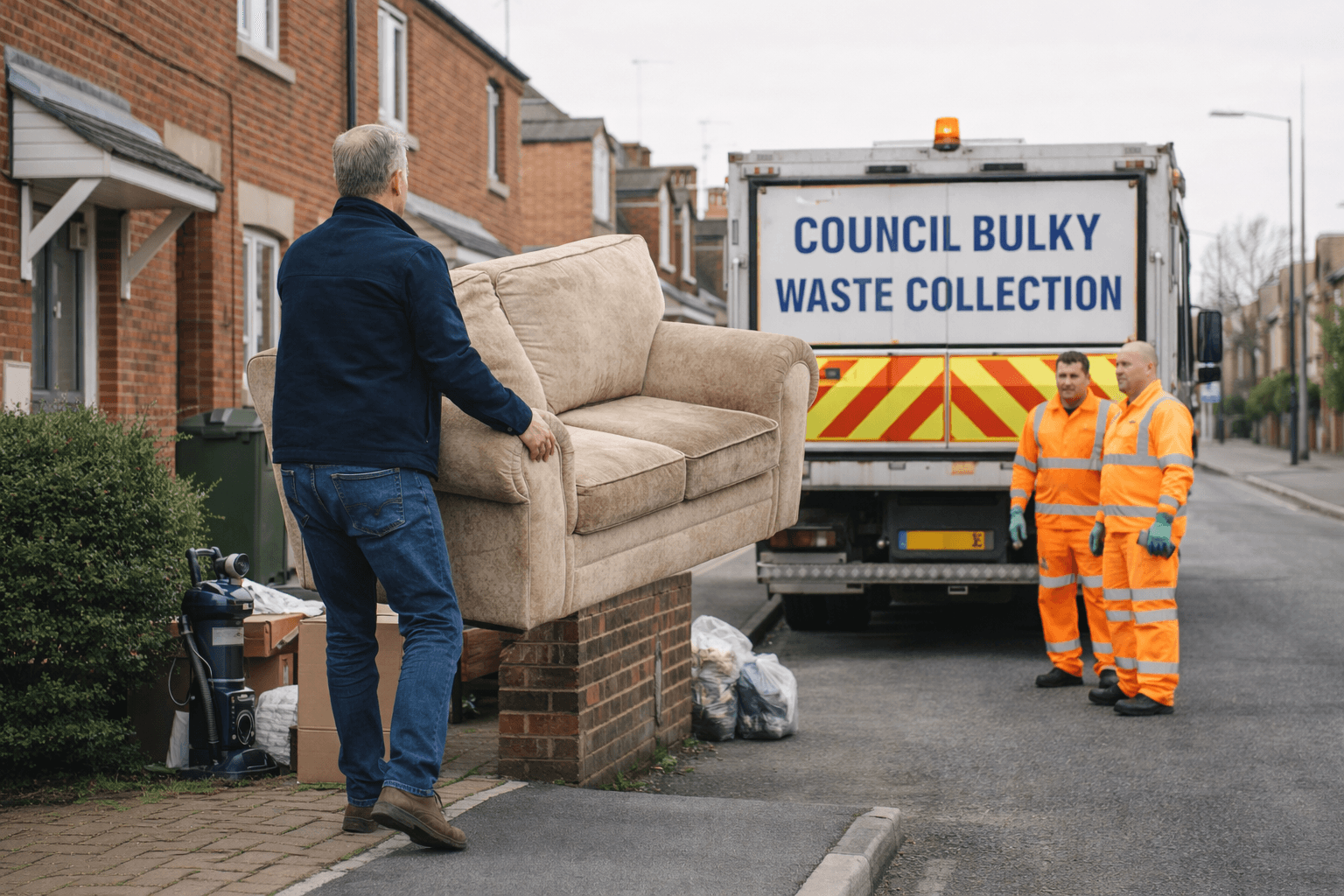
Council bulky waste collection is a service offered by most UK councils for large household items that cannot fit in your regular wheelie bin.
Charges, waiting times and accepted items vary by council, so it’s important to understand how your local authority’s service works before booking.
If you’re comparing options, see our guide comparing skip hire and private waste collection.
This guide explains:
What Is Council Bulky Waste Collection?
Council bulky waste collection is a local authority service that allows residents to book the removal of large household items such as:
Sofas and armchairs
Mattresses and beds
Wardrobes and large furniture
Fridges and washing machines
Carpets and flooring
Large electrical appliances
Each council sets its own:
Prices
Booking system
Collection limits
Waiting times
Accepted items
There is no single national policy, rules vary by postcode.
How Does Council Bulky Waste Collection Work?
The council bulky waste collection service is only for householders.
This means businesses or trade waste is not accepted. In other words, nothing from a business location (eg. pub, office, shop) or waste created by trade (eg. builders rubble, construction waste, garden landscaping rubbish).
Most councils require residents to:
Book online or by phone
Select the number of items
Pay in advance (if a charge applies)
Place items outside the property boundary or at a designated collection point on the collection day
Items are usually collected from:
The front of the property
Communal collection points (for flats)
Many councils do not collect items from inside the home.
Collection dates are often fixed rather than time-specific.
You may need to leave items outside overnight or early in the morning before collection.
How Much Does Council Bulky Waste Collection Cost?
Most councils charge for bulky waste collection because the service involves:
Manual handling of large items
Transport and disposal costs
Recycling or specialist processing (e.g. fridges or electrical items)
Administrative booking systems
Some councils offer one free collection per year, while others charge for every booking.
Typical price ranges:
£20–£40 for 1–3 items in many areas
Some councils charge per item (e.g. £10–£35 each)
Others charge a flat rate for a collection slot
A few councils offer free collections in limited circumstances
However:
Electrical items may carry higher fees
Additional items are usually charged separately
Missed collections may incur rebooking fees
In some London boroughs, charges can exceed £50–£70 per booking
⚠️ Important: Councils generally limit the number of items per booking (often 3–5 items maximum)
In some instances, councils also offer concessions to people receiving certain government benefits. This varies by council, as does the amount of discount.
Why Do Council Bulky Waste Charges Vary?
Bulky waste collection charges are not set nationally. Each local authority sets its own pricing structure based on local operational and contractual factors.
Charges can vary by postcode due to:
Waste contractor agreements
Many councils outsource collection and disposal to private waste management companies. Contract terms, service levels and recycling requirements affect overall costs.
Local disposal infrastructure
Access to recycling facilities, transfer stations and treatment plants varies across regions. Areas with fewer nearby facilities may face higher transport costs.
Population density and demand
Urban boroughs with high demand may structure pricing differently to rural councils with lower collection volumes.
Item handling requirements
Some items, such as fridges, electrical appliances or upholstered furniture, require specialist processing. This can increase collection fees.
Budget pressures and service models
Waste services operate within local authority budgets. Some councils subsidise bulky waste services, while others recover more of the operational cost through booking charges.
Because pricing structures differ, it’s always best to check your specific council’s website before booking.
For a broader comparison of costs across collection types, see our Rubbish Removal Prices Guide.
How Long Does Council Bulky Collection Take?
Waiting times vary by area, but typical timeframes are:
1–3 weeks in many regions
Up to 4 weeks in busy periods
Longer after holidays or during peak moving seasons
Most councils:
Do not offer same-day service
Do not provide specific collection time windows
May require items to be left outside the property
If timing is urgent, council collection may not be the most suitable option.
If you need faster removal, you may want to compare council services with other rubbish removal options that offer shorter waiting times.
What Items Do Councils Accept?
Typical accepted items include:
Furniture
Mattresses
White goods
Large household items
However, many councils do not accept:
Plasterboard
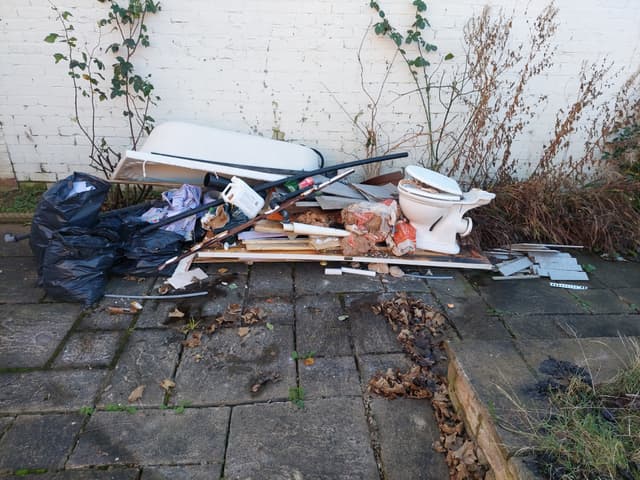
Rubble and construction waste
DIY waste
Hazardous waste
Commercial waste
Garden soil or heavy materials
Some councils also refuse:
Items contaminated with mould or pests
Overweight items
Items not placed correctly for collection
Always check your specific council’s website before booking.
Do Councils Recycle Bulky Waste?
Yes, most councils aim to:
Reuse suitable items
Recycle materials where possible
Send remaining waste for energy recovery
Minimise landfill use
However, actual recycling rates vary by council and by waste stream.
Some councils prioritise reuse where possible, particularly for furniture in good condition. However, items that cannot be reused are processed according to local waste management contracts.
Recycling outcomes vary by council and by waste stream.
For a full explanation of how bulky waste is processed, see our complete guide to bulky waste disposal in the UK.
Council vs Private Bulky Waste Collection
While council services can be suitable for some situations, private waste collection services often offer greater flexibility and faster removal times.
Here’s how they typically compare:
Feature | Council | Private |
|---|---|---|
Cost | Often cheaper for small number of items | Market-based pricing |
Waiting time | 1–4 weeks typical | Often 24–72 hours |
Same-day service | Rare | Common |
Item limits | Usually 3–5 items | Flexible |
DIY / builder waste | Usually not accepted | Accepted |
Time slot control | Limited | More flexible |
When Council Collection May Be Cheaper
You have 1–2 standard household items
You are not in a hurry
Your items meet council criteria
You can leave items outside
When Private Collection May Be Better
You need same-day or fast removal
You have multiple bulky items
You have DIY or renovation waste
Your items are heavy or difficult to access
You need collection from inside the property
Are Council Bulky Waste Charges Worth It?
Council services can be cost-effective for small, non-urgent collections. However, they may not always be the cheapest overall option when:
Additional items are charged individually
Waiting times are long
Access restrictions apply
Certain waste types are excluded
Comparing total cost, including time, flexibility and convenience, is important.
Final Thoughts
Council bulky waste collection can be a practical option for small, non-urgent household items. However, availability, pricing and rules vary significantly between local authorities.
Before booking, check:
Item limits
Charges
Waiting times
Access requirements
Waste type restrictions
If speed, flexibility or larger loads are important, alternative collection services may be worth comparing.
Related Guides
For a full overview of how different disposal routes compare, see our guides:
Frequently Asked Questions
How many items can I book with my council?
Most councils limit bookings to 3–5 items per collection.
Can I book same-day bulky waste collection with the council?
Same-day service is rare. Most councils require advance booking.
Do councils collect sofas and mattresses?
Yes, in most areas. However, some councils charge separately per item.
Do councils collect DIY waste?
Usually no. Rubble, plasterboard and construction materials are often excluded.
Is council bulky waste collection free?
Some councils offer limited free collections for residents on certain benefits, but most charge a fee.
What happens if the council refuses my bulky waste?
If an item doesn’t meet council criteria, the collection may be cancelled and fees may not be refunded. Always check accepted item lists before booking.
Can I cancel a council bulky waste booking?
Cancellation policies vary by local authority. In many areas:
Cancellations must be made within a specified timeframe (often 24–48 hours before collection).
Refunds may not be guaranteed if cancellation is late.
Missed collections due to incorrect item placement may require a rebooking fee.
Always check your council’s cancellation terms before booking to avoid additional charges.
Related Articles
DIY & Rubble Disposal Guide UK
Last updated: May 2026 Estimated reading time: 8 minutes DIY projects and home renovations can creat...

How to Dispose of Old Carpet in the UK
Last updated: May 2026 Getting rid of old carpet, underlay, rugs or flooring waste? This guide expla...
How to Dispose of Rubbish in London
Last updated: May 2026 Looking to get rid of bulky waste in London, such as old furniture, appliance...